Dry needling and cupping: what each one is actually doing
Two treatments people ask about constantly, explained without the mysticism and without the marketing.
September 1, 2026 · 4 min read
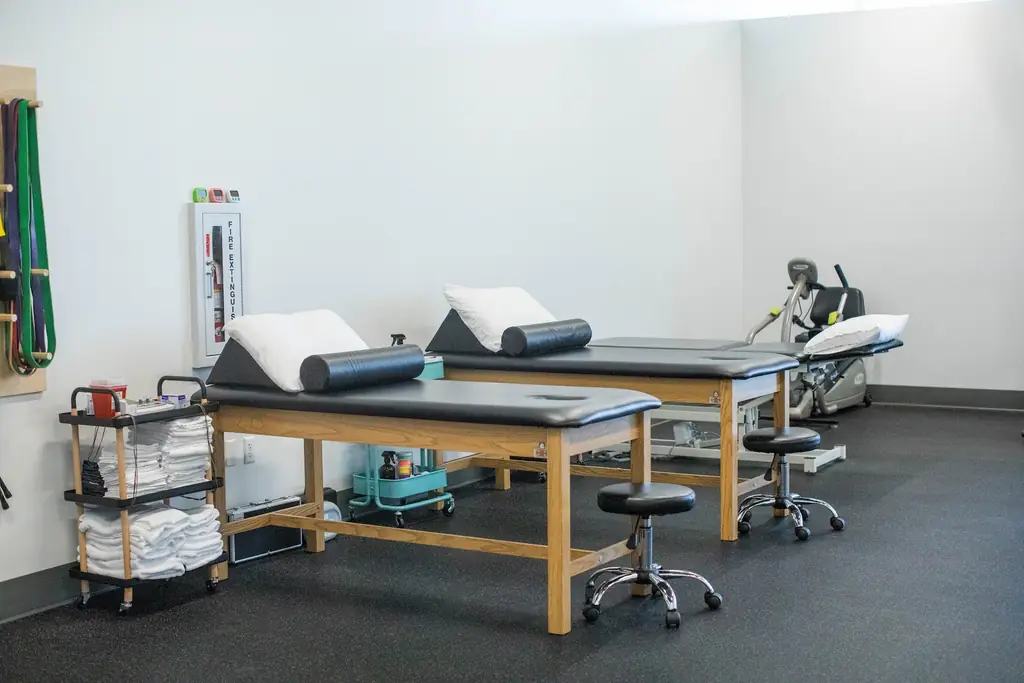
Two techniques get asked about more than everything else combined at a clinic that offers them. One involves needles and gets confused with acupuncture. The other leaves circular marks and gets written off as an Olympic swimmer fad. Both are ordinary tools with specific jobs, and it is worth knowing what those jobs are before you decide whether you want either.
Dry needling is a Western technique with a Western rationale
Dry needling uses thin, solid filament needles inserted into myofascial trigger points, which are the taut, irritable bands within a muscle that refer pain elsewhere and limit how far a joint will travel. The needle is not delivering anything, which is where the word dry comes from. It is the mechanical event of the needle in the trigger point that does the work.
This is the part that gets muddled: the needles look similar to acupuncture needles, and that is the extent of the overlap. Dry needling comes out of Western neuromuscular science and targets a specific structure a therapist has just palpated. Acupuncture works from a different tradition, a different map of the body and a different set of target points. Same object, different reasoning entirely.
What people report from it is fairly consistent: pain relief that is often immediate, improved range of motion, less muscle tension, and the sense that something which had been locked has let go. There is a circulation and inflammation component too, which is part of why the benefit continues over the days after rather than only during.
What a needling session is like, honestly
Thirty to sixty minutes, on a treatment table. The therapist palpates first, because the technique is only as good as the target, then inserts the needles. You feel a pinch on entry. Once the needle is in the right place you often feel a deep, dull ache, which is a different sensation from sharp pain and much more tolerable than people expect. Sometimes the muscle twitches. That twitch is the response the therapist wants.
Afterwards, expect twenty four to forty eight hours of soreness in the area. It feels like post-workout soreness rather than injury. That is the normal course, and it settles.
Conditions it gets used for at Fortify include neck and back pain, shoulder impingement, tennis and golfer's elbow, hip and knee pain, headaches and migraines, plantar fasciitis, sciatica, fibromyalgia, post-surgical pain, sports injuries and repetitive strain injuries. It is rarely the whole plan. It is the thing that makes the rest of the plan possible.
Cupping pulls, where everything else pushes
Almost every hands-on technique compresses tissue. Cupping is the one that does not. Cups create suction on the skin and draw the tissue underneath upward, and that single difference in direction is the whole rationale for using it.
Three things follow from the lift. Negative pressure releases fascial restriction and improves how tissue layers glide over each other, which is a specific problem that pressing down does not solve well. The suction stimulates sensory nerves in a way that interrupts pain signalling and prompts an endorphin response. And it helps move cellular waste and inflammatory material out of an area that has been sitting in it.
The marks are not bruises in the impact sense and they are not a measure of how much good it did. They fade. If they matter to you because of a wedding or a holiday, say so and the therapist will plan around it.
How a therapist chooses between them
The choice comes out of the assessment, not out of a menu. Roughly: a discrete, findable trigger point that refers pain and limits a specific movement is a needling problem. A broad area of restricted, sticky tissue where the layers are not sliding is more often a cupping or soft tissue mobilization problem. Scar tissue and dense restriction that a thumb keeps sliding past is where instrument-assisted work and the Graston technique come in.
In practice they are frequently combined in the same visit, and combined again with spinal manipulation or joint mobilization when a segment has stopped moving. One reviewer of the clinic described exactly this: a combination of dry needling and cupping for neck and shoulder pain, over a course of visits rather than in one heroic session.
The part that decides whether any of it lasts
Neither technique is a cure on its own and any clinic telling you otherwise is selling. Hands-on work reduces pain and restores mobility, which creates a window where you can load the tissue and retrain the movement pattern that caused the problem. If nothing goes into that window, the tissue reverts, and you are back in six weeks having the same conversation.
So ask two questions at your visit. Why this technique for my problem, and what am I doing at home to hold the change. A therapist who can answer both clearly is doing the job properly.
Dry needling at Fortify is performed by Jason Harper, PT, DPT, who holds certification specifically in it. The clinic is at 792 S 3000 E, Unit 104 in St. George, and the number takes texts as well as calls.
Fortify Physical Therapy, (435) 216-7929
Call (435) 216-7929More articles
What actually happens at your first physical therapy appointment
Most people arrive with no idea what the hour involves, which makes it harder than it needs to be.
The St. George runner's guide to the ache that is not going away
Four weeks of an ache that will not settle is not toughness. It is information.